
24/7 Emergency Tree Service Line · (585) 000-0000
Buffalo · Rochester · Syracuse · Licensed & Insured · Free Estimates
Grand Island takes weather from every direction, with the Niagara River on all sides and little to slow the wind. We thin and deadwood wooded lots, remove storm damaged trees and clear land from the waterfront to the interior.
Grand Island sits in the middle of the Niagara River between Tonawanda and Niagara Falls, and a good share of it is still woods. Waterfront homes along East River Road and West River Road look out through cottonwoods and willows. Farther in, lots run to acres of red oak, ash and maple, some of it backing onto Beaver Island and Buckhorn Island state parks. Owners here did not move to the island to look at bare lawn. Most want to keep their trees and need them made safer.
That shapes how we work. A typical visit is a day of thinning and deadwooding through a stand, taking out the dead tops, the storm hangers and the crowded stems so the best trees have room. We climb where the wood is sound and bring a bucket truck or crane for dead cottonwoods that cannot be trusted. Long driveways and open ground make access easier than in the villages, though soft clay and wet woods limit where a truck can go for much of the year.

Tree removal on Grand Island ranges from a single dead oak near the house to a row of failing cottonwoods at the edge of the water. Shoreline trees are lowered piece by piece so nothing ends up in the river.
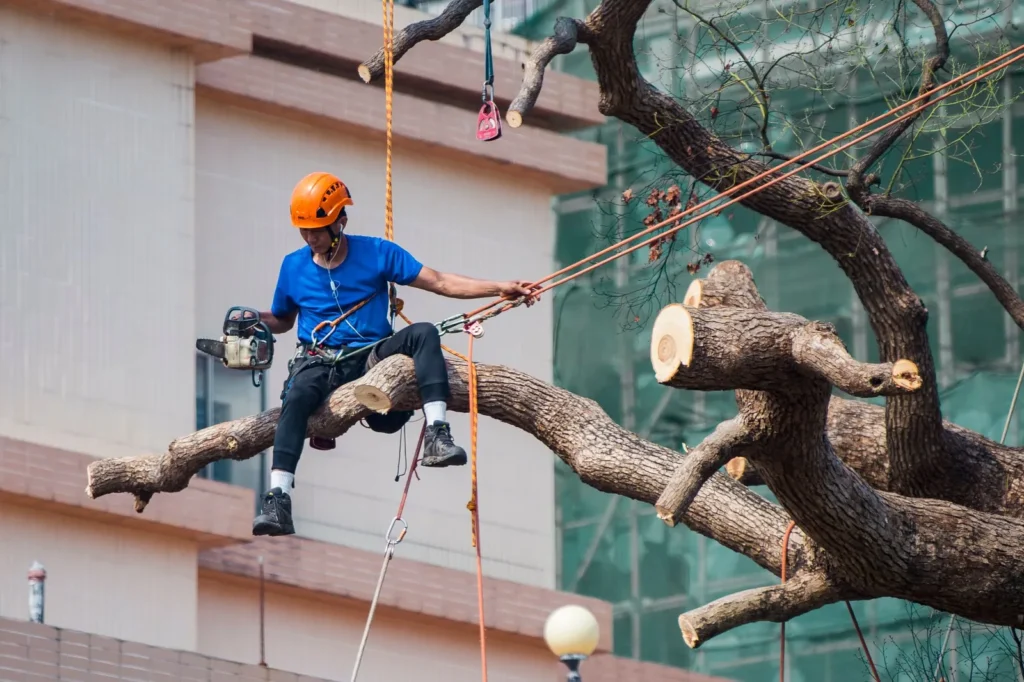
Thinning and deadwooding help island trees shed wind instead of fighting it. Our Grand Island tree pruning takes out dead and crossing limbs and shortens overextended leads on oaks and willows without gutting the canopy.

Wooded lots leave a lot of stumps behind. We offer stump grinding on Grand Island for one stump by the patio or dozens across a cleared half acre, ground 6 to 12 inches below grade after utilities are marked.
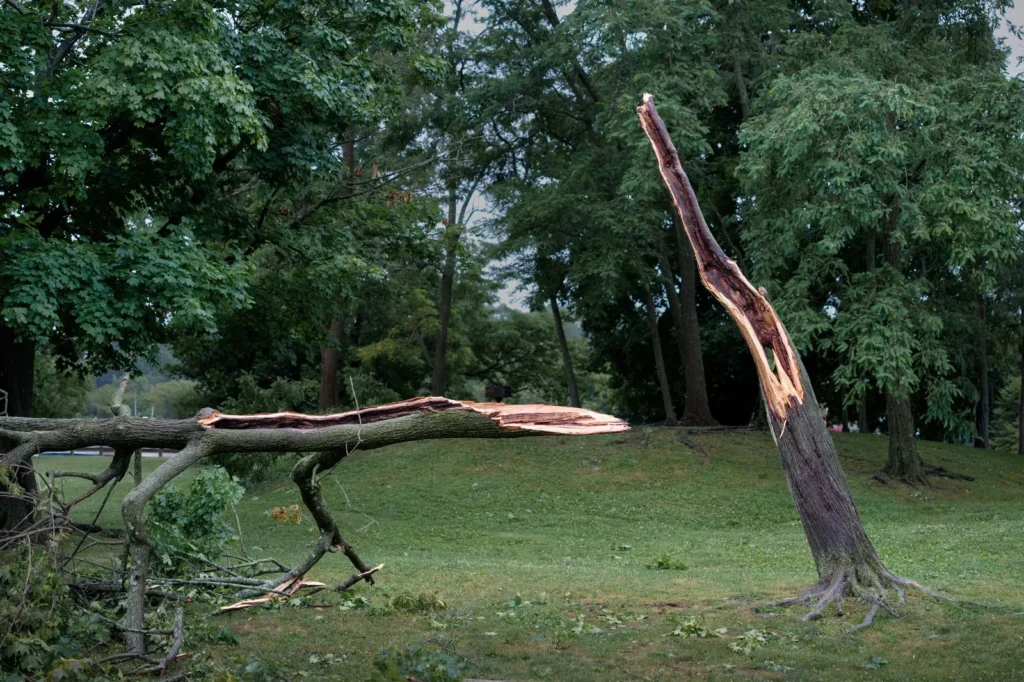
A storm that crosses the river hits the island with nothing in the way. Our emergency crews cut trees off roofs, docks and the long private drives that are often the only way out to the road.

Interior acreage on Grand Island is still thick with second growth, brush and dead ash. Land clearing for a house site, a pole barn or a wider yard includes felling, chipping and hauling, with keeper trees flagged before we begin.
Open water on every side means gusts arrive at full strength. Trees on the west shore lean east from decades of it. We read that lean and the shape of the crown before thinning, because removing the wrong limbs can expose a tree that its neighbors used to shelter.
The island is flat and its heavy clay drains slowly, so woods hold standing water well into May. Roots stay shallow. After a wet stretch, a strong blow can tip an oak that looked perfectly healthy, and equipment has to stay on firm ground or on mats.
Emerald ash borer has killed most of the ash across Western New York, and the woodlots here are full of them standing dead. Dead ash turns brittle and snaps unpredictably. Along trails, driveways and lot lines they should come down before they fall on their own.
Summer on Grand Island is thinning season for waterfront owners who want a view without losing the trees. We raise crowns, remove deadwood over lawns and docks and take weight off willow limbs that reach out above the water.
Fall wind builds through October and peaks in November. Ahead of it we walk wooded lots with owners, mark the dead and leaning trees within reach of the house or the drive, and take them down while the ground is still firm.
Hard frost opens up the back acreage. Once the ground locks, we can drive into wet woods that are off limits in April, which makes winter the season for clearing, dead ash removal and the big cottonwood jobs.
After a winter of gales we get calls from both shores about tops broken out and trees hung up in their neighbors. The crew clears those first, working from the driveways out, and waits on interior work until the woods dry.
When a gale off the river puts an oak on your roof or drops cottonwoods across the driveway, call our 24/7 emergency tree line. Crews come over the bridge to Grand Island, open your access first and then work on whatever the tree hit. Keep well back from anything touching a power line.
Jobs in Grand Island are often paired with stops in North Tonawanda, Tonawanda and Wheatfield. See every town on our Buffalo area page.
Want the detail first? Start with our article on getting trees ready for an Upstate New York winter. Separately, the Cornell Cooperative Extension answers questions about trees suited to this region.
Meet us on Grand Island and we will walk the property line and the shoreline with you, marking what needs to go and what should stay. The written estimate is free and broken out by area.
*Financing available on approved credit. Ask for details.
Tell us about the tree, the property and the best time to reach you. We will call to schedule a free on site estimate.
Prefer to talk? Call (585) 000-0000 any time. Our emergency line is open 24/7.
Send a few details and we will call to schedule a free on site estimate. Emergencies: call the 24/7 line below.
Or call (585) 000-0000 · 24/7 emergency line