Winter in Buffalo, Rochester and Syracuse is hard on trees in a way that few other regions understand. Syracuse averages more than a hundred inches of snow a year. Buffalo’s Southtowns can take four feet in a single lake effect event. Rochester sits in the path of ice storms that roll off Lake Ontario and coat every branch in an inch of glass. Most of the trees our storm crews clean up in February could have been made safe in October for a fraction of the cost.
This is the fall checklist we walk through with homeowners across all three metros. None of it is complicated, and most of it is about weight, wind and knowing what to look for before the leaves come down and hide the problems.
Why winter breaks trees
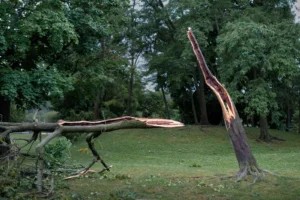
Three forces do the damage. The first is snow load. Wet lake effect snow can weigh twenty pounds per cubic foot, and a long horizontal limb on a silver maple or a white pine can end up carrying several hundred pounds it was never built for. The second is ice. A quarter inch of ice adds roughly thirty times the weight of the branch itself. The third is wind, which turns a dense, unpruned crown into a sail. Add all three together in a January storm and even healthy trees fail at their weakest point, which is almost always a tight fork or an overextended limb.
The National Weather Service office in Buffalo and its counterpart in Binghamton, which covers Syracuse, both publish winter storm outlooks that are worth watching, but by the time a warning is issued it is too late to prune. The work has to happen in the fall.
1. Prune for weight and wind
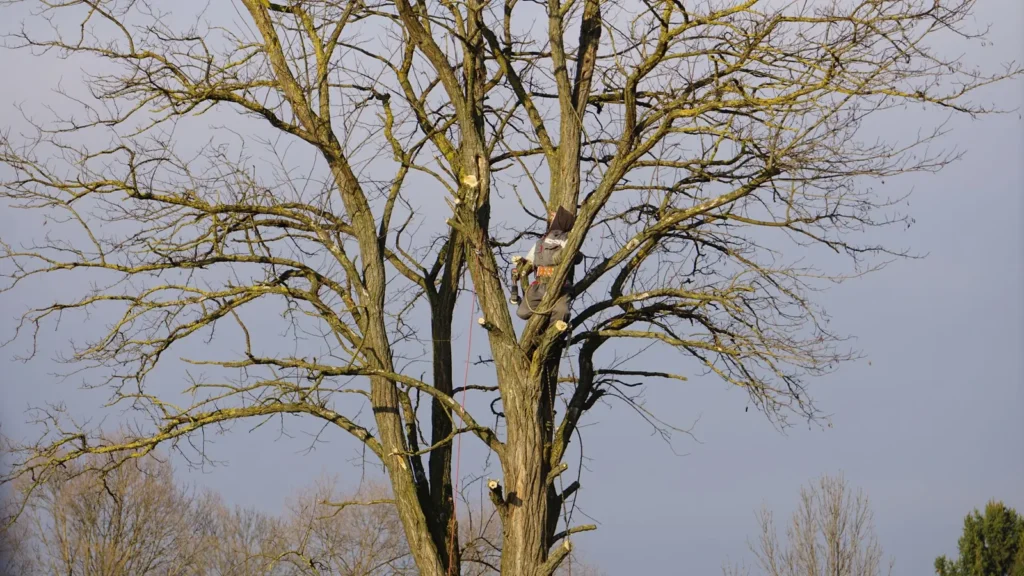
The single most effective thing you can do before winter is reduce the load on limbs that are already overextended. Long branches that reach out horizontally over the roof, the driveway or the neighbor’s fence carry the most snow and have the least support. Our pruning crews shorten those limbs back to a strong lateral branch, which keeps the tree’s shape while taking away the long reach that snaps them.
Thinning a dense crown matters too. A crown you cannot see through catches wind like a wall. Removing crossing, rubbing and inward growing branches lets the wind pass through and cuts the load on the trunk. The goal is never to strip the tree, just to open it up. A properly thinned tree looks almost the same from the street and behaves completely differently in a storm.
2. Take out the deadwood now
Dead limbs are the first to fall under ice, and they fall without warning. They are also easiest to spot in early fall while the healthy branches still have leaves. Walk the yard on a clear day and look for bare limbs, limbs with peeling bark, and limbs with fungus growing on them. Anything larger than your wrist that hangs over a roof, a walk or a place where people park should come out before the snow. This is quick work for a climber and it removes the most likely source of winter damage.
3. Look hard at the forks
Two trunks meeting in a tight V with bark pinched between them is the classic winter failure in this region. Silver maples, Bradford pears, Norway maples and many older ornamental trees grow this way, and the fork holds until one side takes an ice load the other does not. Then half the tree is on the ground. If your tree has a tight fork, reduction pruning is the usual answer. It takes weight off both sides so the fork carries less load. A tree with a deep split is past that point and is safer taken down in fall than left for January. Either job costs far less than removing the tree after it lands on something, and both need to happen before the ground freezes.
4. Check the evergreens
Spruce, pine, arborvitae and hemlock hold snow on their needles and bend under it. Young or narrow evergreens can be loosely tied with soft rope or burlap strips to keep the leaders together. Large white pines are a different problem: their long, flat branches snap under wet snow, and a big pine near a house should be assessed for deadwood and overextended limbs the same way a hardwood is. Never knock heavy snow off frozen branches with a broom or a shovel. Frozen wood is brittle and the branch will break in your hand.
5. Water and mulch young trees
Trees planted in the last three years need deep watering into late fall, right up until the ground freezes, so they enter winter with enough moisture in the roots to survive the drying winds. A two to three inch layer of mulch out to the drip line, kept a few inches away from the trunk, insulates the roots. Wrap the trunks of thin barked young trees like maples and fruit trees to prevent frost cracking on the south side, where winter sun warms the bark during the day and the night freeze splits it.
6. Deal with the ash before it deals with you
If you still have an ash tree standing, the emerald ash borer has almost certainly found it, and a dead ash sheds limbs all winter. Ash wood becomes brittle unusually fast after the tree dies, and by the second winter a dead ash is unsafe to climb. Read our guide on the signs a tree needs to be removed for what to look for, and if the crown is thinning, schedule the removal this fall rather than waiting for spring.
7. Clear the ground around the house
Snow load is a roof problem too. Limbs that overhang the roof drop snow and ice onto it, and branches touching the siding or the gutters will chafe and pull them loose under ice. A few feet of clearance around the roofline, gained by crown raising, protects the house and keeps the eaves clear. If you have stumps in the lawn from summer removals, fall is also the time for stump grinding, before they become a hidden obstacle under the snow.
What to do when a storm hits anyway
Trees will still come down. When one does, keep everyone away from it and from any downed lines. Do not try to cut a tree that is on a structure or under tension. The trunk can spring or roll when the weight shifts. If it is safe to do so, take photos of the damage for your insurance claim, then call our 24/7 emergency line. We stabilize first, remove second, and we send photos and an itemized invoice that adjusters accept. The utility’s storm safety page covers what to do around downed power lines, and it is worth reading before the season starts.
Snow load by the numbers
It helps to understand just how much weight a winter storm puts on a tree. Fresh powder weighs three or four pounds per cubic foot, but the wet lake effect snow that falls when the lake is still warm in November and December can weigh twenty pounds or more. A limb that is fifteen feet long and three feet wide catches roughly forty five square feet of snow. Six inches of wet snow on that limb is more than four hundred pounds hanging off a single attachment point. Now add a glaze of ice from a freezing rain event and the number doubles. No pruning cut can make a limb strong enough to carry that, which is why we shorten the longest limbs rather than trying to brace them.
Species matters as much as size. Silver maple, box elder, willow, poplar and Bradford pear have soft, fast grown wood and break first. Oak, hickory, sugar maple and beech are far stronger and usually lose only deadwood. Spruce and fir shed snow well because of their shape, while white pine and Scotch pine hold it on flat branches and snap. If you know what species you have, you know where to look first, and our crews can identify anything you are unsure of during the fall inspection.
A simple fall timeline
September is for looking. Walk the property, note deadwood and limbs over the house, and photograph anything that worries you. October is for pruning, while the ground is firm, the crews are available and the leaves are still on for a few more weeks. November is for the young trees: water deeply, mulch, wrap thin barked trunks and tie up narrow evergreens. December is for the emergency plan: save our number, know where your gas and electric shutoffs are, and keep a path to the driveway clear so a crew can reach the house if a tree comes down. Homeowners who follow that rhythm rarely need us in a hurry, and when they do, the damage is a limb rather than a whole tree.
Commercial properties and HOAs
Property managers have the same problem multiplied by every tree on the site, plus liability for tenants, customers and parked cars. We walk commercial properties and homeowner associations in the fall, flag the trees that need attention in priority order and price the work as a single package. Parking lot trees, entrance plantings and the big shade trees around clubhouses are the usual concerns, and a documented fall inspection is worth having in the file if a claim is ever filed.
Book a fall inspection
A fall inspection takes about half an hour. We walk the property with you, point out the deadwood, the weak forks and the overextended limbs, and give you a written estimate for whatever is worth doing before winter. Most homeowners are surprised how little it costs to make a big tree safe, and every one of them is glad they did it when the first lake effect warning goes up. Serving Buffalo, Rochester, Syracuse and the towns between. Request your free estimate before the snow flies.
Need a hand with a tree?
Free estimates across Buffalo, Rochester and Syracuse. Call or send the form.